News July 2026
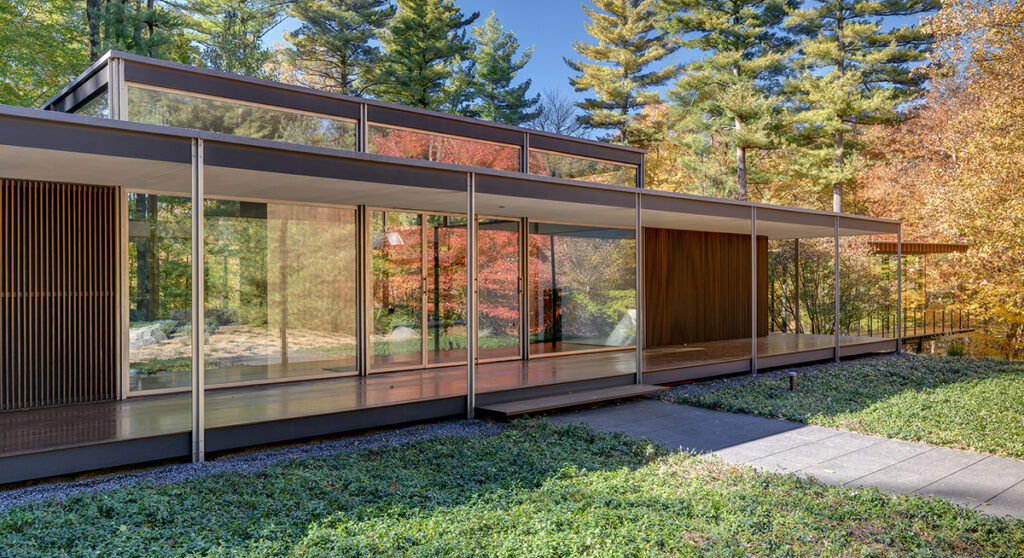
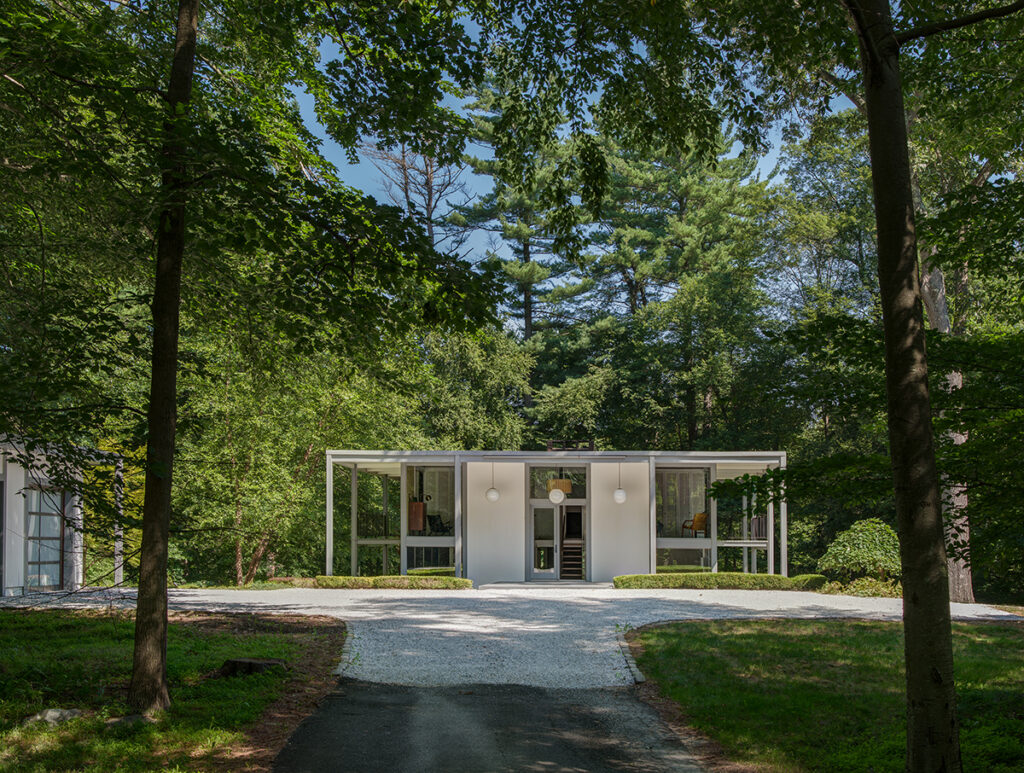
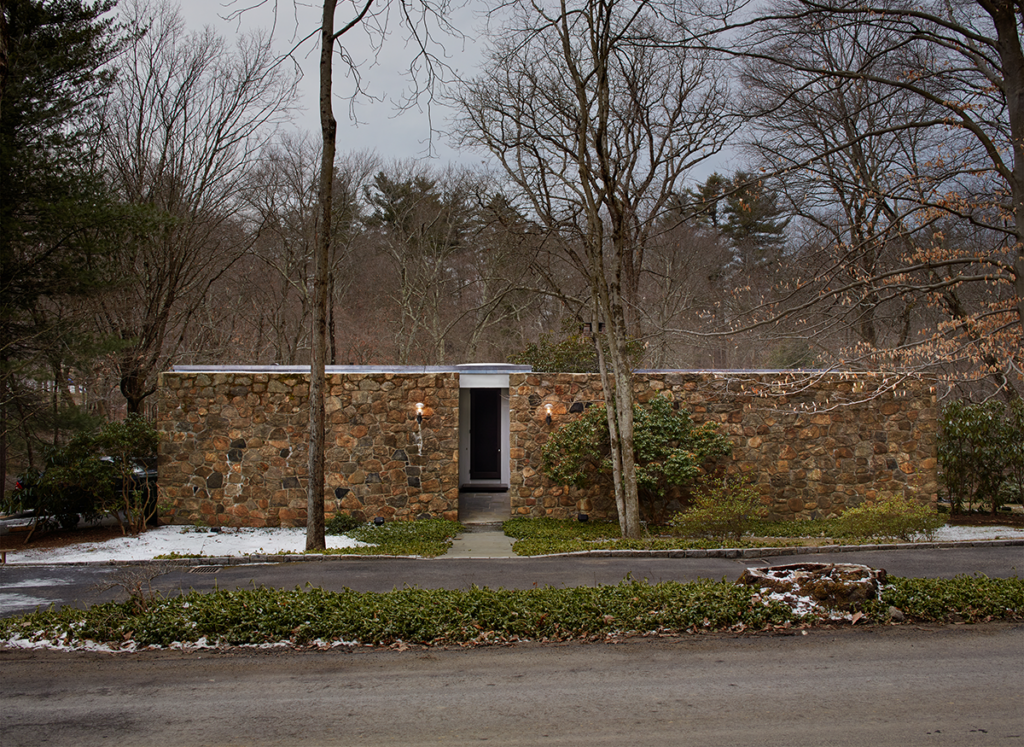
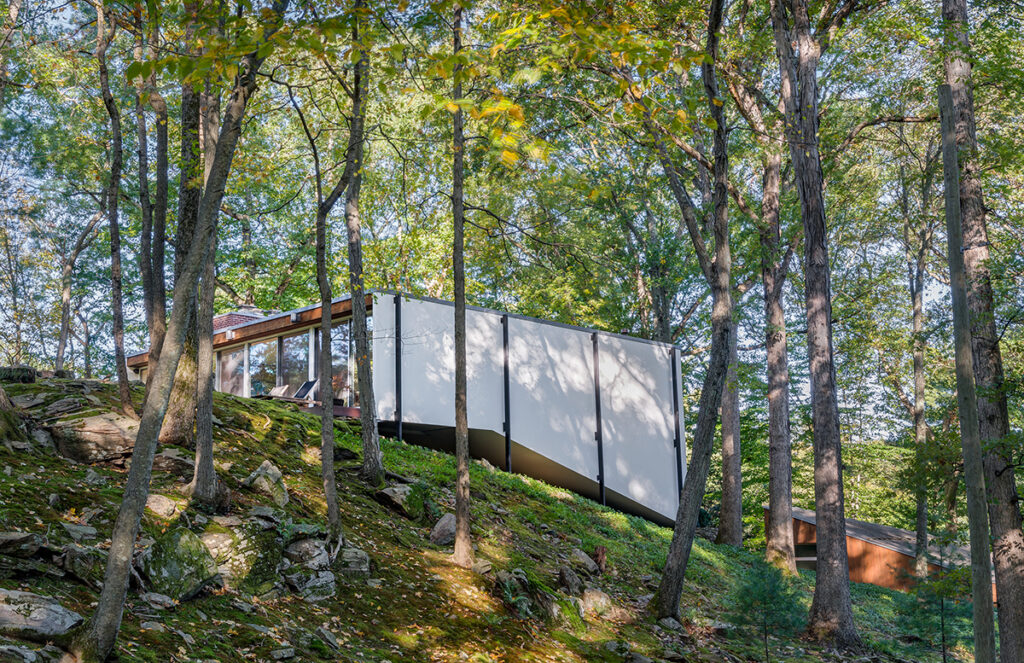
Nestled in the wooded, rocky outcroppings of New Canaan, CT, six houses become the town’s first Historic District
New Canaan, CT, has its first historic district and it’s Modern. The New Canaan Preservation Alliance proudly announced mid-June that, following years of advocacy and coordination with homeowners, local preservationists and the State Historic Preservation Office, the Chichester Road Historic District has been listed on the National Register of Historic Places. The District’s six single-family houses were completed between 1956 and 1964 by architects who were fueling New Canaan’s emergence as a mecca of Modern residential architecture.
Make no mistake, the six houses are not the simple white boxes on flat expanses of lawn that might pop to mind as a 1950s touchstone of modern residential design. Chichester Road runs through a densely wooded area with a varied typography, its schist and gneiss ridge, winding streams, ponds and large rock outcroppings offering up dramatic building sites. All six lots slope in at least one direction. The architects maximized views and quietly integrated their bold new objects into the natural landscape. They took up the challenge of untamed suburbia and delivered architecture equal to the demanding sites.
Architect John Black Lee (1924-2016) moved to New Canaan in 1950 after seeing Marcel Breuer’s widely published first house in the town, completed in 1947, and Philip Johnson’s Glass House of 1949. In 1955, having been fully won over by the natural beauty of the local terrain, Lee purchased 21 acres bordering Chichester Road, which he subdivided into six parcels. He kept one for himself and sold the remaining lots with the stipulation that houses constructed on them be designed by architects working in the Modern camp. He went as far as retaining final design approval, spelled out in the sales contract, as long as he lived on the original parcel. The town of New Canaan had launched its ever-popular Modern House Day Tour in 1949, providing a steady influx of potential buyers and clients. Lee eventually designed houses for two of the lots—one solo and one a collaboration with Harrison DeSilver. Hugh Smallen designed three and James Evans one. The six houses that came to be on Lee’s Chichester Road lots form the historic district:
Lee House II, 1956
John Black Lee
Smallen House, 1957
Hugh Smallen, Jr.
Garage, 1962, Hugh Smallen, Jr., also contributing building
System House, 1961
John Black Lee and Harrison DeSilver
Individually listed on National Register in 2010
Studio, 1975, Gary Lindstrom, also contributing building in district
Barnum House, 1963
James Evans
Becker House, 1963
Hugh Smallen, Jr.
Parsons House, 1964
Hugh Smallen, Jr.
Individually listed on State Register, 2010
Garage, John Black Lee, 1971, also contributing building
The houses remain on their original sites and there has been no infill. All are well-preserved. Where changes and additions have been made they respect original design intent and materials, and the house’s unique siting in the landscape. Equally important, the Chichester Road setting is relatively unchanged, with tree growth and its management being the key variable.
Years ago, in interviews with the early preservation advocates, John Black Lee often shared how exciting it was to live in New Canaan in the 1950s and 1960s. The town attracted architects and designers of all stripes—interior, landscape, industrial and furniture. In a 2001 interview, Lee spoke positively of the experience: “Modern was more spirit than style in the ‘fifties’. We all shared the same philosophy, went to the same parties….” Affordable lots were still plentiful. The architectural press was thriving and promoting local work. Modern architecture was growing in popularity across the country along with postwar optimism and general prosperity. The New Canaan architects had good reason to believe in Modern architecture’s future. Lee shared the same exuberance when it came to design, “We had these lots with wonderful views and we had these huge pieces of glass.” The current owners of the houses embrace this esprit, an aesthetic of simplicity and an appreciation of the natural surroundings that their architects so deftly captured.
The National Register nomination for the district was written by James Sexton, PhD., of Archaeological and Historical Services, Inc. Sexton’s research and analysis make a strong case for the listing under Criteria A and C.
Criteria A: Property is associated with events that have made a significant contribution to the broad patterns of our history.
Criteria C: Property embodies the distinctive characteristics of a type, period, or method of construction or represents the work of a master, or possesses high artistic values, or represents a significant and distinguishable entity whose components lack individual distinction.
From the nomination’s Statement of Significance Summary:
“The Chichester Road Historic District is eligible for listing in the National Register of Historic Places under Criteria A and C for its association with the development of affordable single-family homes, progressive social milieu, and the development of Modern style architecture during the mid-twentieth century. The neighborhood demonstrates significance under Criteria A in the category of Social History for its association with the group of mid-twentieth century architects who were living, socializing, and producing contemporary designs in New Canaan. The buildings in the district are also significant under Criteria C, as a clearly identifiable group of Modernist-style houses designed by architects Harrison DeSilver, James Evans III, John Black Lee, and Hugh Smallen, Jr. in a small development created by John Black Lee and restricted to Modern style houses.”
The document is highly detailed, well-illustrated and recommended reading for anyone interested in the more technical side of National Register listing or the full story on the houses, individual architects and New Canaan context. Download Chichester Road Historic District, National Register of Historic Places Registration form (pdf 32MB).
Today, New Canaan is recognized internationally for its impressive stock of midcentury Modern houses designed by renowned architects. Between 1948 and 1976 more than 100 “midcentury Moderns” were built. About 20 have been demolished. New Canaan Preservation Alliance President, Neele-Banks Stichnoth remarks: “We appreciate the National Trust’s support of our architectural treasures, and this listing is an affirmation that honors our past and provides access to preservation incentives and grants that support preservation in the future.” Board member Susan Leaming Pollish, who is the long-time owner of the John Black Lee II House, supervised the project. The Alliance received support for the project from the State Historic Preservation Office of the Department of Economic and Community Development with the funds from the Community Investment Act of the State of Connecticut.
—Kathleen Randall