News September 2026
Section 106 Primer: A Key Component of Major Preservation Projects Under Severe Threat
On October 15, 1966, President Lyndon Baines Johnson signed into law the National Historic Preservation Act. The Advisory Council on Historic Preservation (ACHP) is the federal executing agency for this legislation, and State Historic Preservation Offices administer the regulations on the local level.
A fundamental part of this act is the Section 106 review process which requires federal agencies to consider the impact of federally funded or federally assisted projects on historic resources, including architecture, neighborhoods and cultural landscapes. If the project has the potential to affect historic properties, a Section 106 review will take place which incorporates public input into the process. This review process exists to determine whether a project has an Adverse Effect on the historic resource.
The federal agency does this review in collaboration with consulting parties. These participants can include state and municipal governments, advocacy, civic and industry groups, and other interested organizations and individuals. Docomomo is often a consulting party on Section 106 reviews.
If a proposed project is determined to diminish the character-defining features that qualified a property for inclusion in the National Register, then the undertaking would be deemed an Adverse Effect. At this point in the review, the federal agency would explore strategies and design alternatives to avoid, minimize, or mitigate the Adverse Effect with the objective of reaching an agreement with the State (or Tribal) Historic Preservation Officer. Upon reaching a resolution, a Memorandum of Agreement (MOA) or a Programmatic Agreement (PA) is issued.
Section 106 in Action
Over 100,000 Section 106 reviews are undertaken each year, most of which are not controversial. Only about 2,000 per year result in a determination that a project will have an Adverse Effect on an historic resource, and of these, almost all (98%) are successfully redesigned or mitigated.
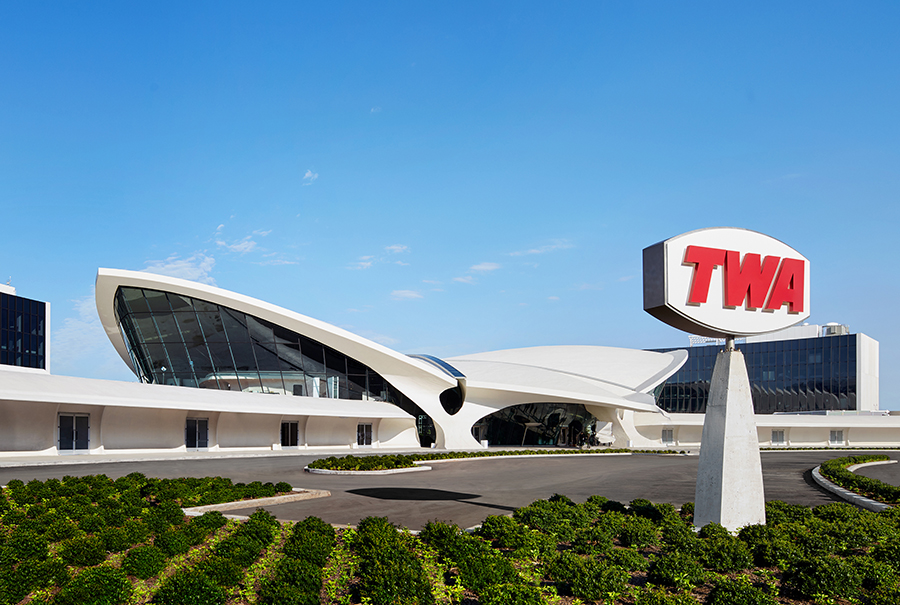
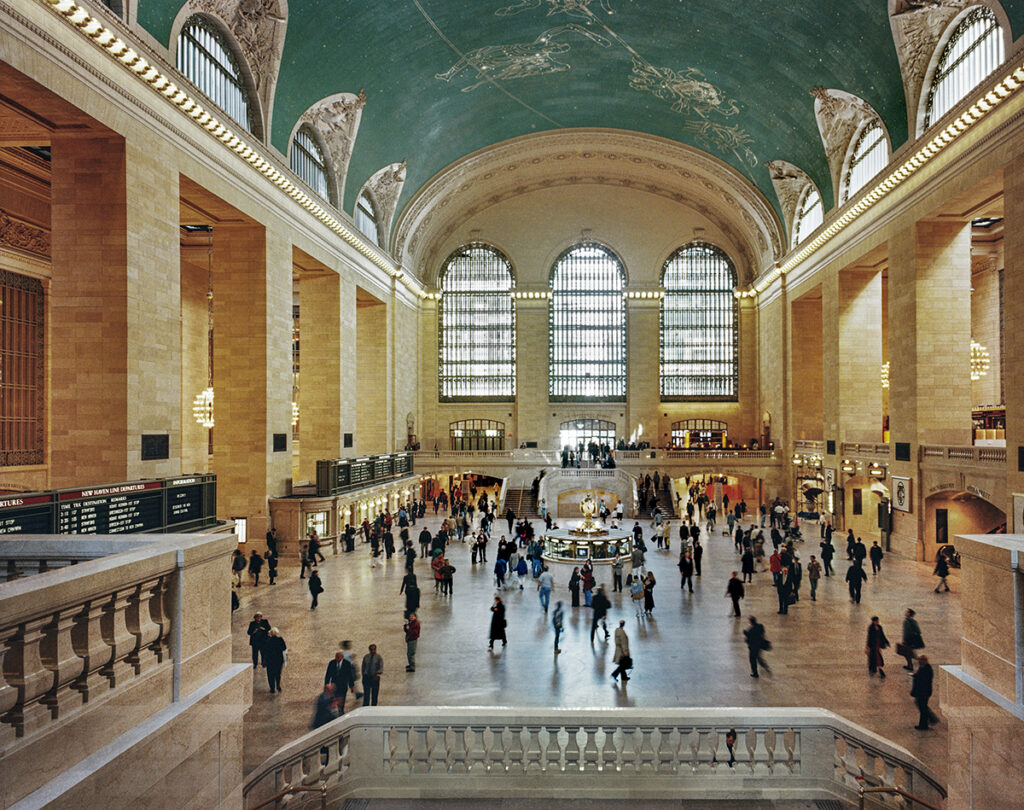
This is a process that works. Section 106 reviews have had positive effects on many notable New York City projects. The Vanderbilt Hall – Grand Central Terminal rehabilitation, the Survivors Staircase at the World Trade Center redevelopment, Moynahan Train Hall and Governor’s Island land planning are all more respectful of their historic legacies due to Section 106. Meaningful input from the public and consulting parties were instrumental both in saving and in improving the design of the TWA Flight Center/Hotel at JFK International Airport by reinforcing the concept to retain the flight tubes and reconnect to the JetBlue Terminal behind it. The Section 106 process has just been announced for the proposed improvements to Penn Station, including the extant 1908 McKim Mead & White powerhouse on East 31st Street.
In New Jersey, Section 106 review protected historic buildings at the Allied Textiles and Printing industrial sites in Paterson, NJ, during an EPA-led site clean up. It was used in planning for the Hudson River Tunnel project to assess the potential impact of a major infrastructure project to historic properties along the route. In Connecticut, plans for a massive new interchange on the Merritt Parkway in Norwalk were modified to include strict landscape protections and context-sensitive design as a result of Section 106 review. A Section 106 review was key to preventing the demolition of the old Stamford Post Office.
The ACHP and its Proposed Changes
The ACHP consists of 24 members, most of whom are appointed by the sitting president. These include four from the general public, four historic preservation experts, seven heads of federal agencies such as Departments of War, Homeland Security, and Treasury, and three permanent members representing preservation organizations such as the chair of the National Trust for Historic Preservation. The composition of the ACHP has changed drastically over the last several years and currently does not have a chairperson who must be approved by the Senate.
On July 17, 2026, the ACHP released to the public a number of changes which would severely diminish the effectiveness of the Section 106 review process. One week later, the ACHP voted to approve these revisions. The most critical revisions include the following:
- Federal agencies will no longer be obligated to notify state and local governments when potentially damaging projects are proposed within their jurisdiction.
- Federal agencies will no longer be required to attempt to avoid or minimize damage to historic resources which may be affected by proposed projects.
- Federal agencies will not be required to provide state and local governments with the opportunity to comment when federal agencies propose projects which may damage or destroy historic places within their jurisdictions
- Significant cultural landscape features would no longer be considered historic properties.
- The federal government will no longer be required to consult with Tribal communities or seek their expertise regarding their own significant cultural resources.
- The opportunity for the public to comment on federal historic preservation policies or actions would be solely at the discretion of the federal agency.
What’s next?
The ACHP submitted these proposed rule changes to the Office of Information and Regulatory Affairs (OIRA), a part of the Office of Management & Budget (OMB). Interested parties have the opportunity to meet with OIRA to discuss concerns. Docomomo US has requested such a meeting. A series of dates are scheduled for September.
After reviewing the comments with OIRA, the ACHP publishes the proposed revisions in the Federal Register, open for public comment. At the end of this public comment period, the ACHP will vote on the final rule changes. If the ACHP votes in favor of the revisions, the final language is submitted to OIRA for its review. If deemed acceptable, the revised regulations are published in the Federal Register and go into effect 30 days later. Dates for these later administrative milestones have not been released.
This is not a fait accompli. There is still time to voice objections.
- Write your governor and congresspersons. See resources below
- Begin drafting comments for the public comment period. Identify examples of past Section 106 reviews with positive outcomes—literally all—as these are critical in the regulation review process.
- Stay tuned for announcements of the 30-day public comment period.
Rather than convening stakeholders to identify practical reforms that would streamline and improve the current rules, the ACHP is unilaterally proposing changes that will eviscerate the Section 106 process as it has existed for 60 years. This is the most serious attack ever made on historic preservation and historic preservation law in this country. Once federal agencies can damage and destroy historic architecture and landscapes without as much as notifying state and local governments the fallout will be with us for generations.
—Richard Southwick
UPDATE:
On August 27, DOCOMOMO US/New York Tri-State signed on to Cultural Heritage Partner’s “Open Letter to Congress” opposing these unprecedented efforts to weaken Section 106 and the federal protections for historic places. Over 600+ organizations have signed the letter including Docomomo US and 13 chapters across the country.
Open Letter to Congress from National Coalition to Protect and Strengthen Section 106 of the National Historic Preservation Act
RESOURCES FOR MORE INFORMATION AND TAKING ACTION:
National Trust for Historic Preservation
Section 106 Under Threat
Excellent resources for learning more and taking action
National Trust for Historic Preservation: Section 106 Survey
Use this site to share how Section 106 consultation has benefited your community
Cultural Heritage Partners
War Room
(you can read a redlined version of the proposed changes to Section 106 Regulations here. Not for the faint of heart.)
Defend Section 106
Scripts, talking points and guidance for writing effective public comment responses to ACHP
Official Government Site:
OIRA Section 106 Rule Change
New York Times
Paul Goldberger wrote a compelling essay for the NY Times on the threat to Section 106, “Forget the East Wing. The Real Demolition Has Only Just Begun,” August 9, 2026.
Docomomo US statement on Section 106 proposed changes:
Docomomo US strongly opposes the proposed changes to the Section 106 regulations, which would significantly reduce public participation, weaken the role of consulting parties, and shift greater decision-making authority to federal agencies.
Follow Docomomo US updates:
Proposed Changes Threaten the Future of Section 106 Review